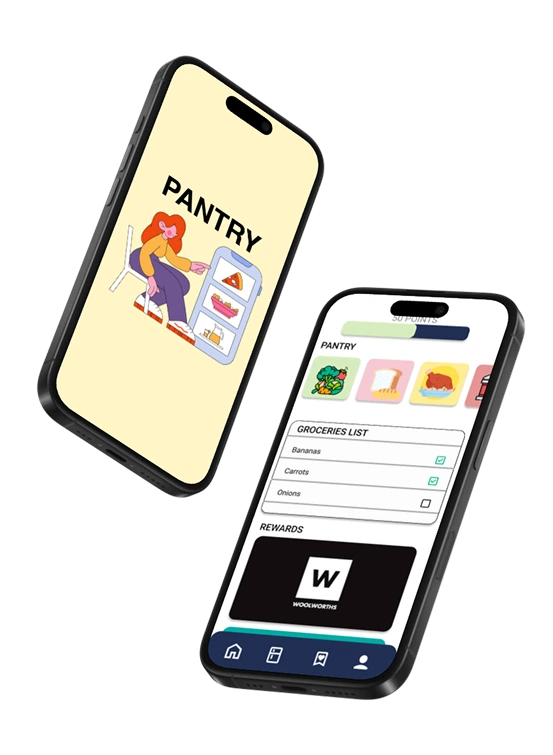
Project Overview
The Pantry App is a mobile app concept designed to reduce food waste and encourage home cooking by applying principles of behavioural psychology and emotional design. The project focuses on helping users become more mindful of their food habits, particularly the tendency to order food instead of cooking at home.
Project Goal
The main goal of this project was to practice using behavioral psychology, habit formation, and emotional design to influence positive user behavior. Specifically, the app aims to:
Reduce food waste
Encourage cooking at home
Help users build healthier, more intentional food habits
Background & Problem
Through personal reflection and discussions with others, I identified a common and often overlooked bad habit: frequently ordering food instead of cooking. This behavior often leads to:
Wasted groceries
Poor meal planning
Increased spending
Reduced motivation to cook
This issue was especially common among young adults and individuals living alone, who found it easier and more convenient to order food than prepare meals.
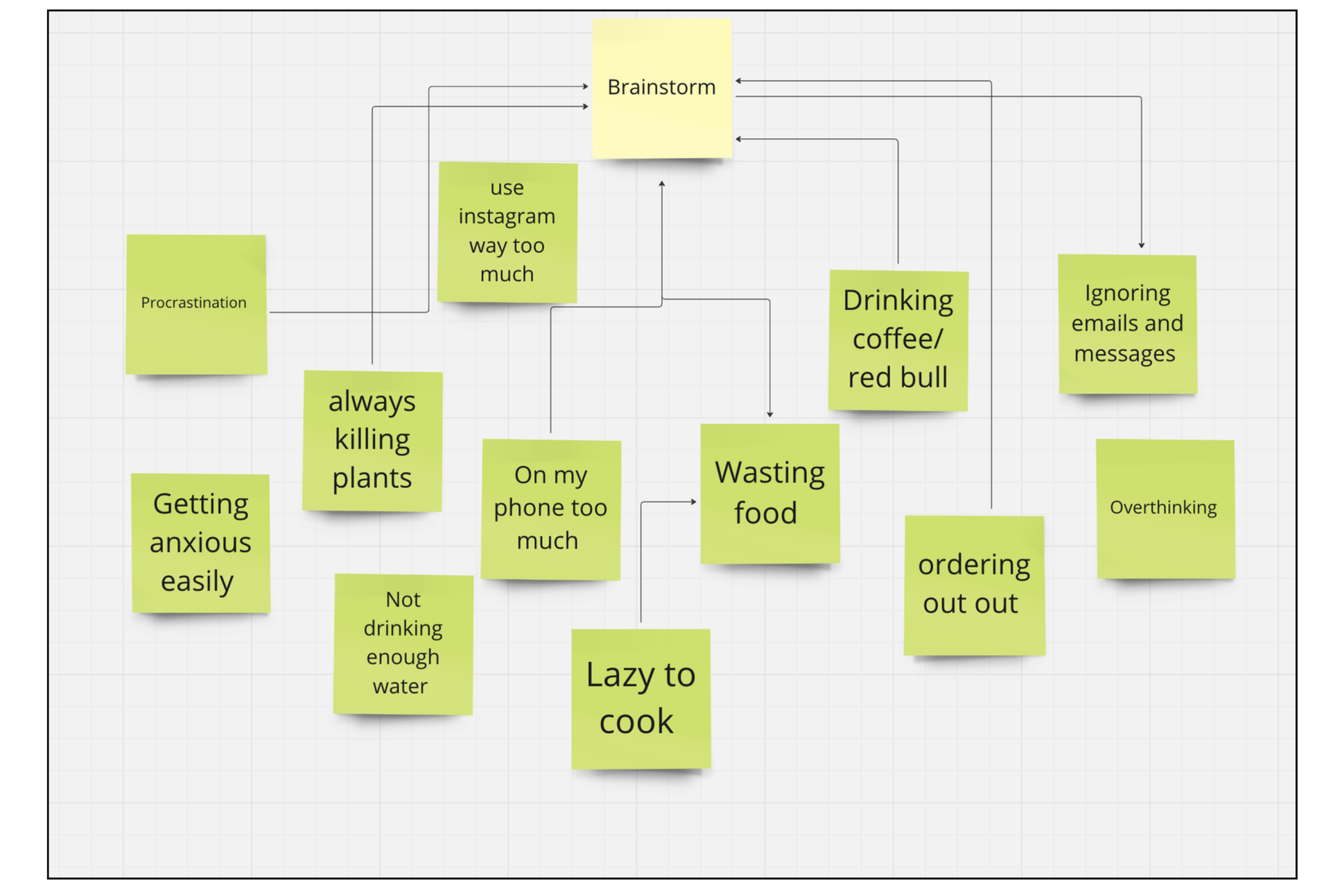
Honest Habit Mapping
I began the process with honest habit mapping, brainstorming behaviours users might want to improve. Many of these behaviours were based on my own habits, as well as feedback from friends and peers.
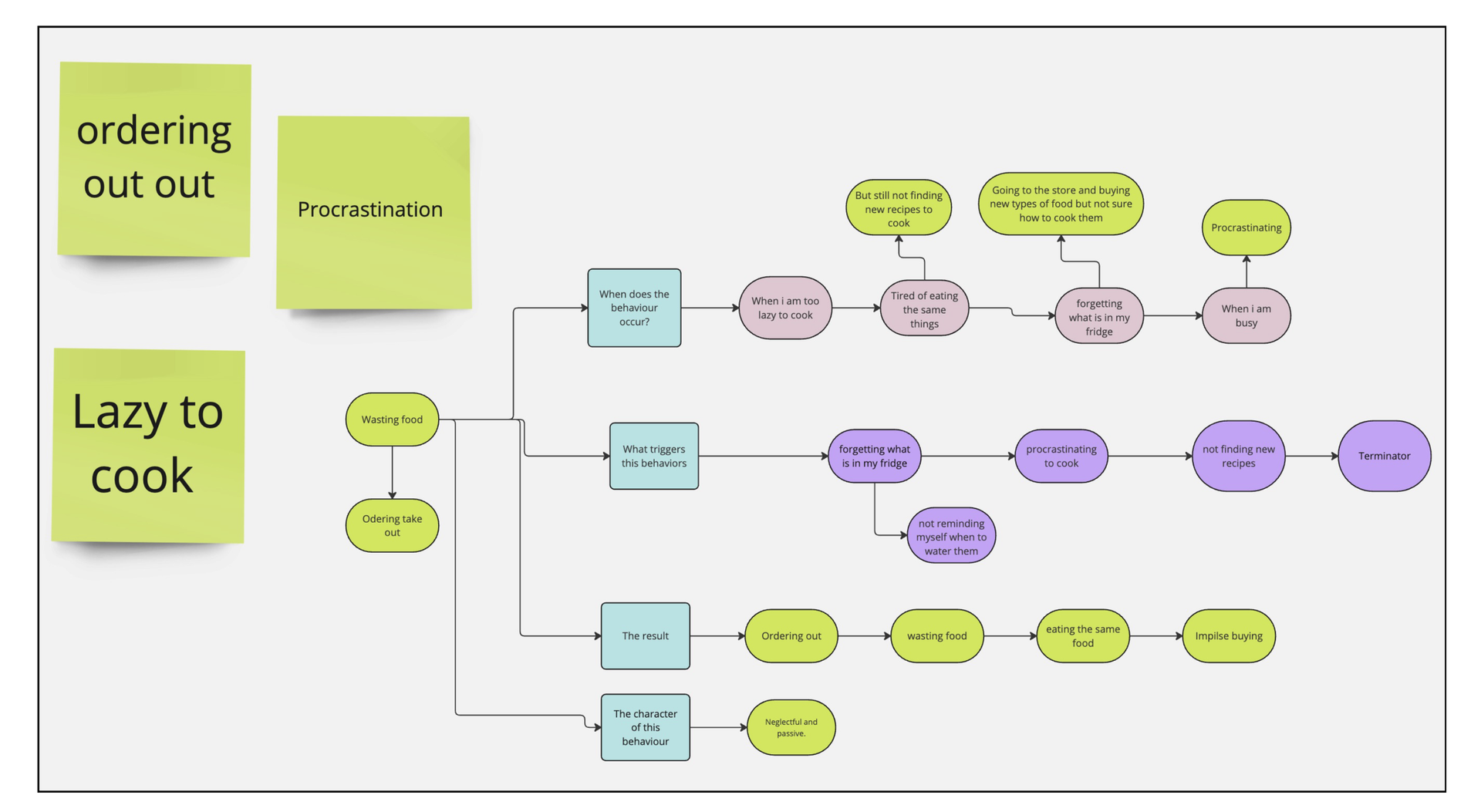
I created a visual behaviour map to better understand:
When the habit occurs
What triggers it
The sequence of actions
The emotional and practical outcomes
Research & User Insights
To validate my assumptions, I spoke with friends and peers to see if they experienced similar challenges. The majority confirmed that ordering out was a bad habit they struggled with and often overlooked.
Research & User Insights
Using insights from habit mapping and research, I created user personas representing young adults and individuals living alone who struggle with cooking motivation, food waste, and reliance on food delivery apps.
These personas helped guide design decisions and ensure the app addressed real emotional and behavioural needs.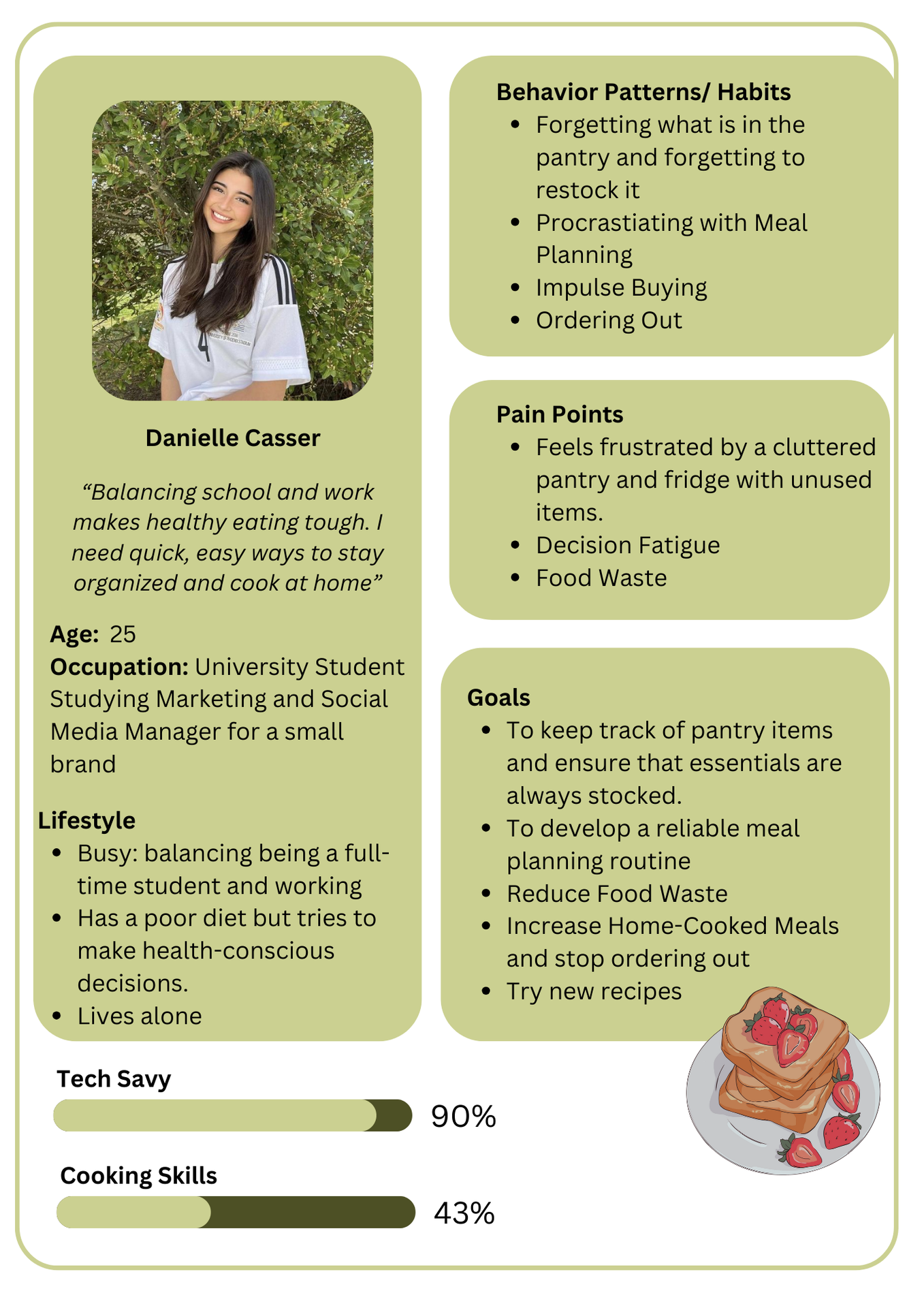
Visual Planning
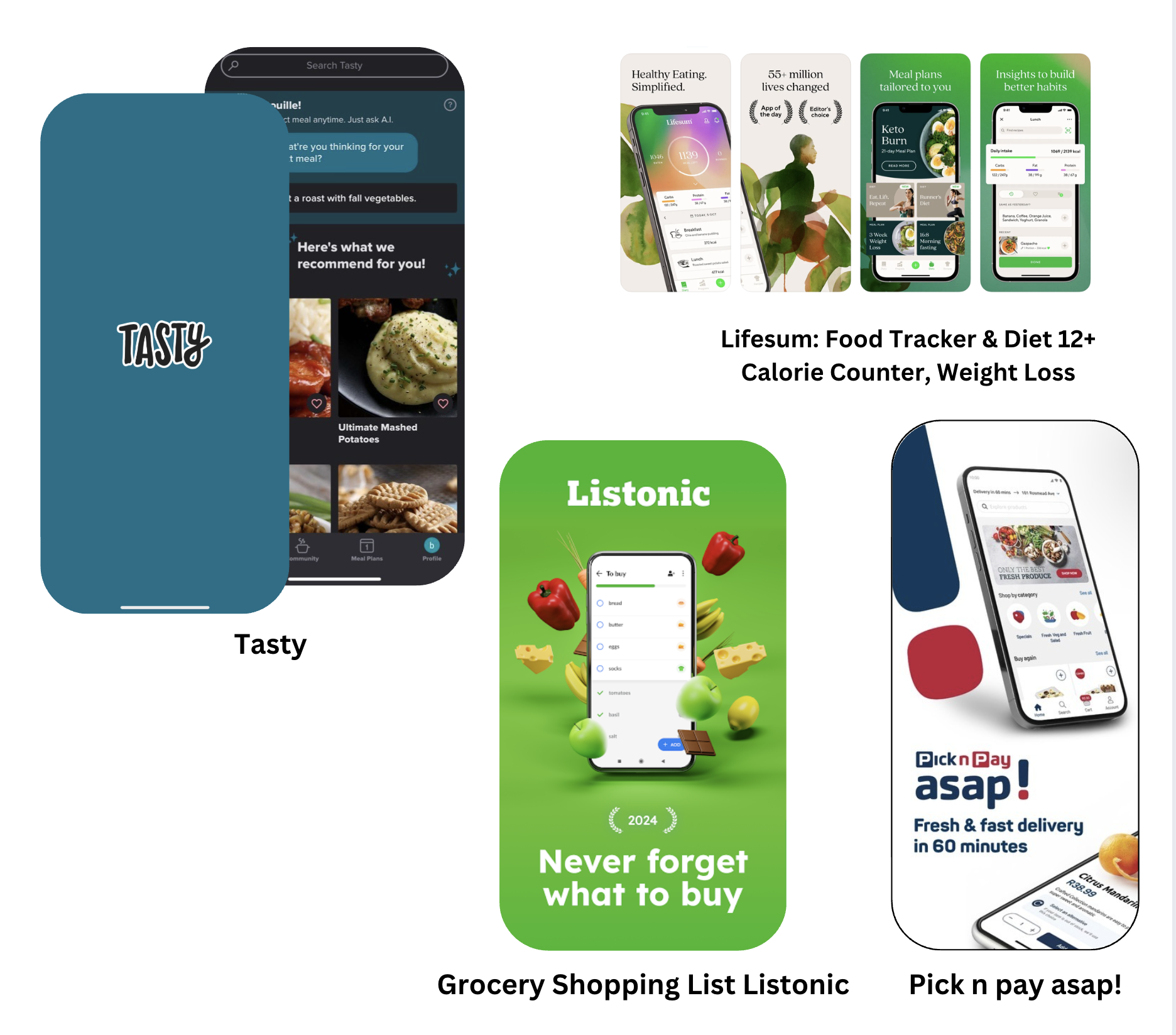
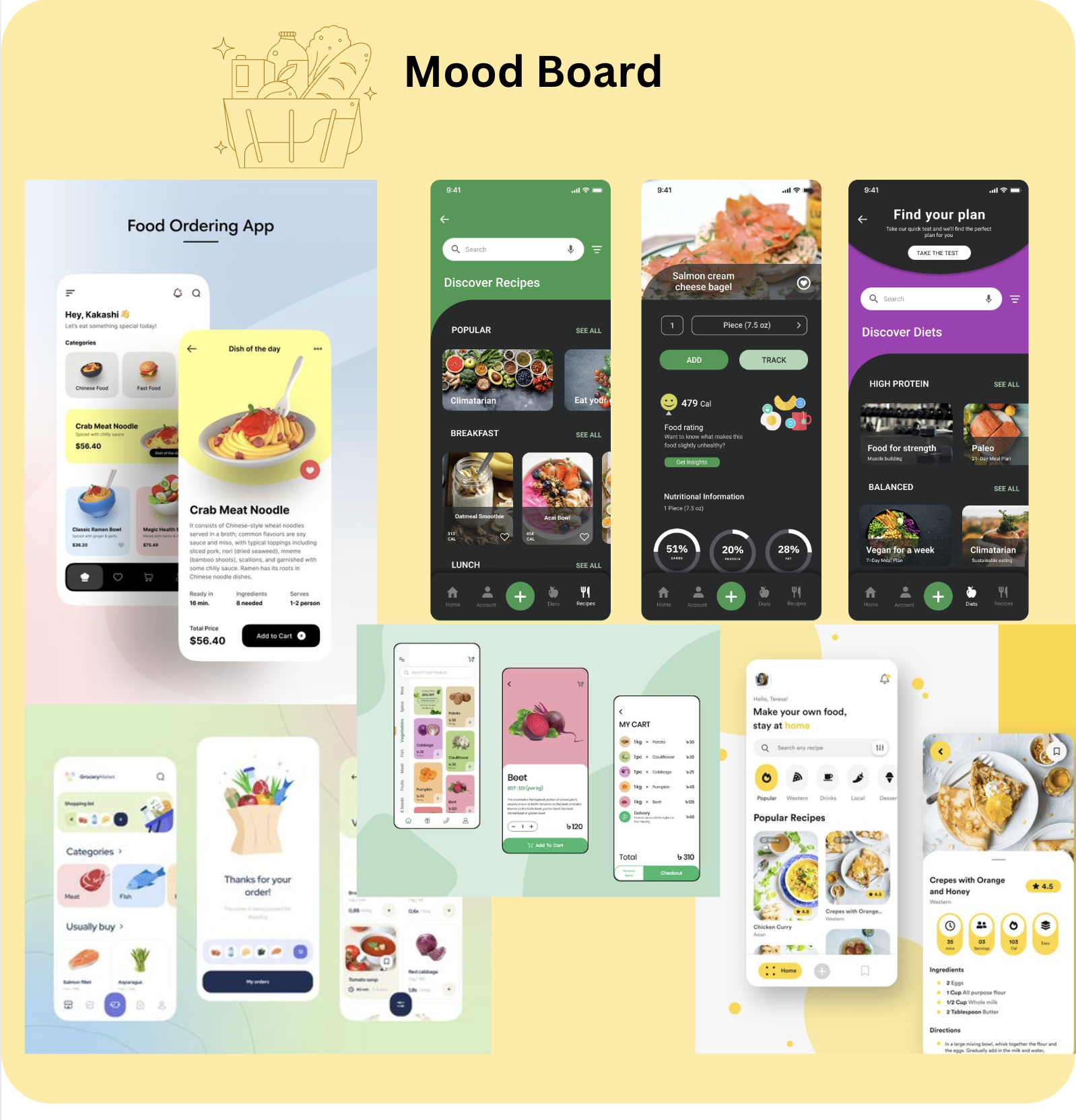
During visual planning, I researched similar apps to understand best practices in layout and navigation. I was inspired by:
Calorie counters and food trackers for their clean, minimal UI
Tasty for recipe discovery and inspiration
Listonic for grocery organization
Pick n Pay ASAP for practical food-related flows
These references influenced the app’s structure, simplicity, and focus on health and wellbeing.
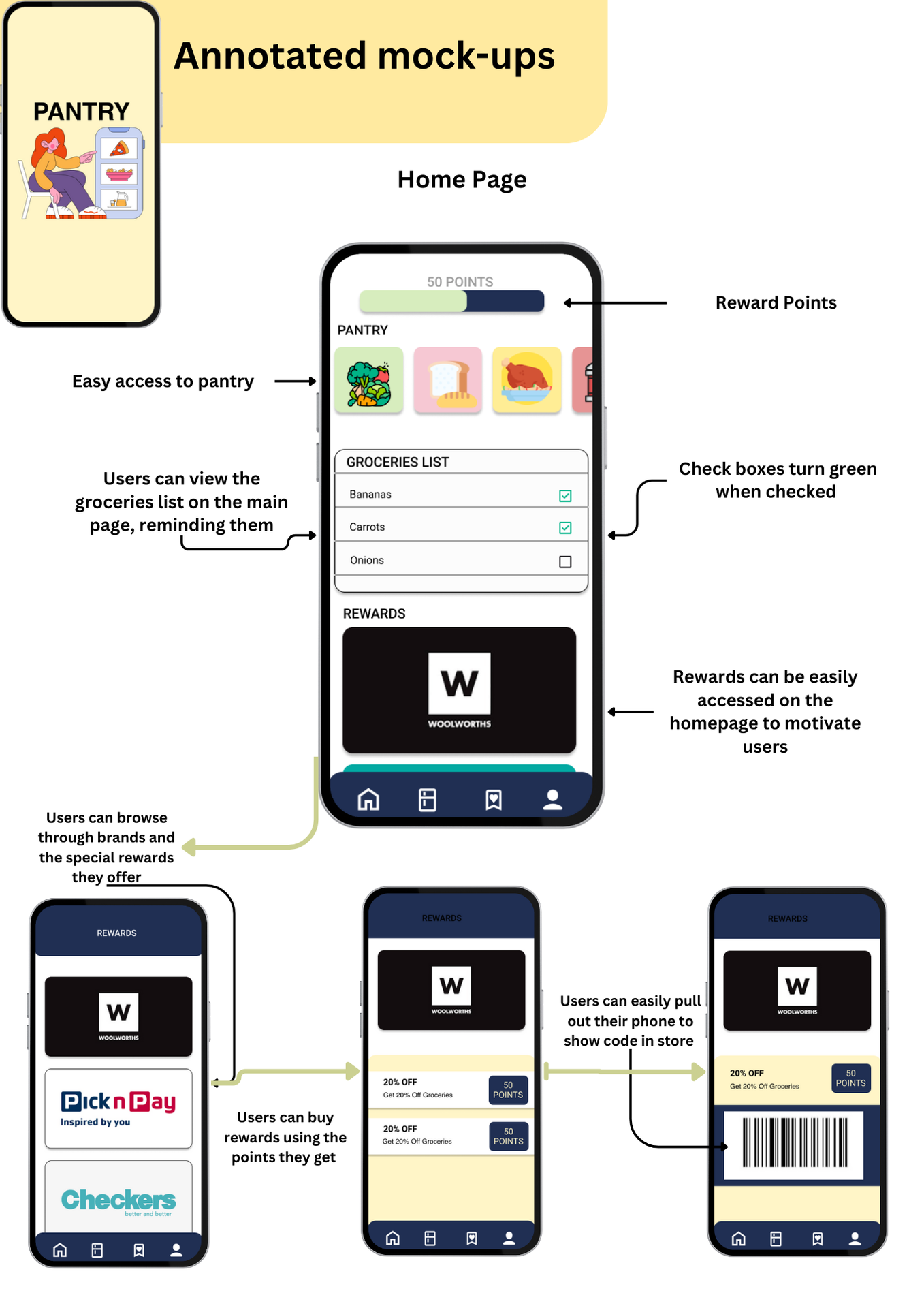
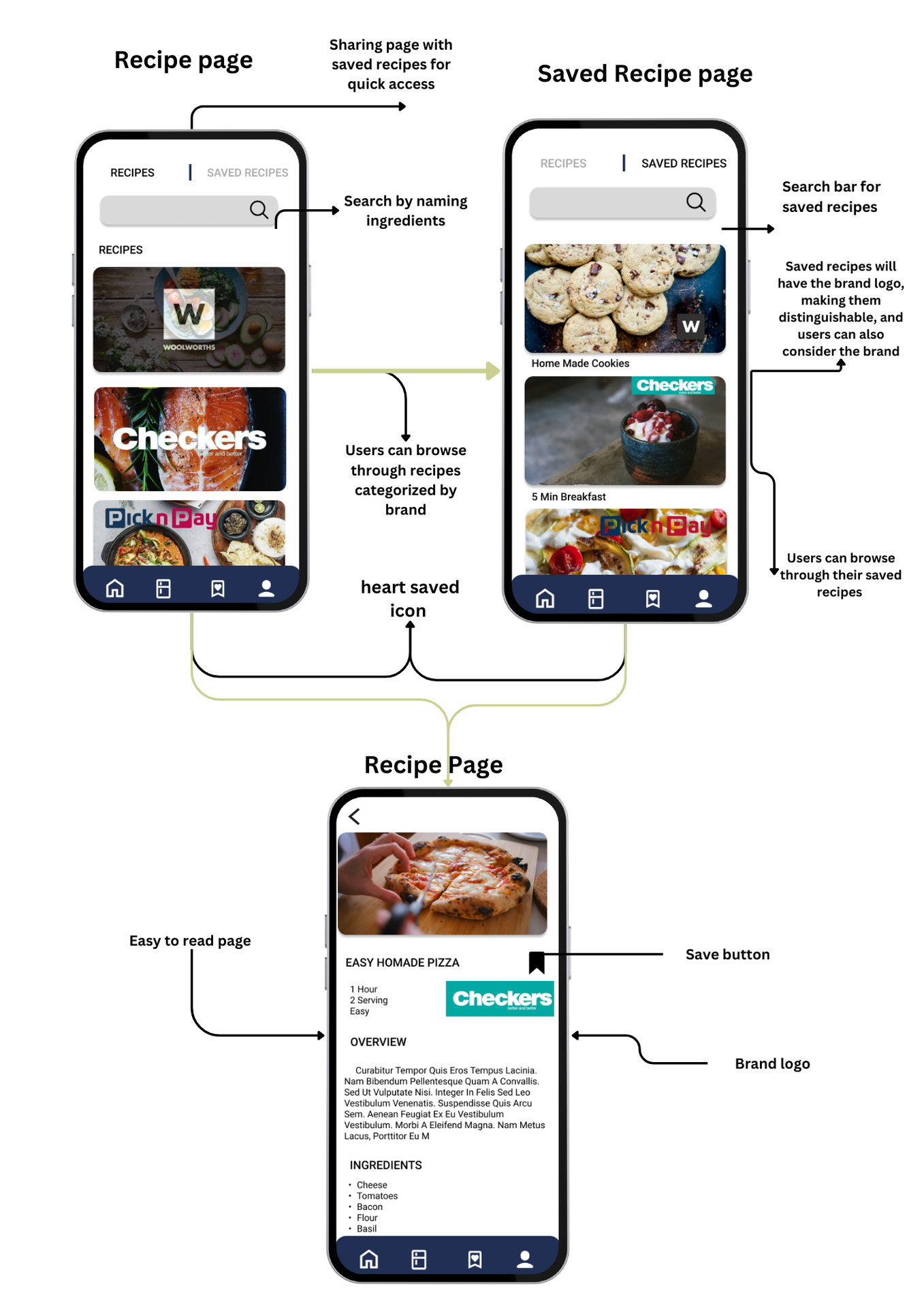
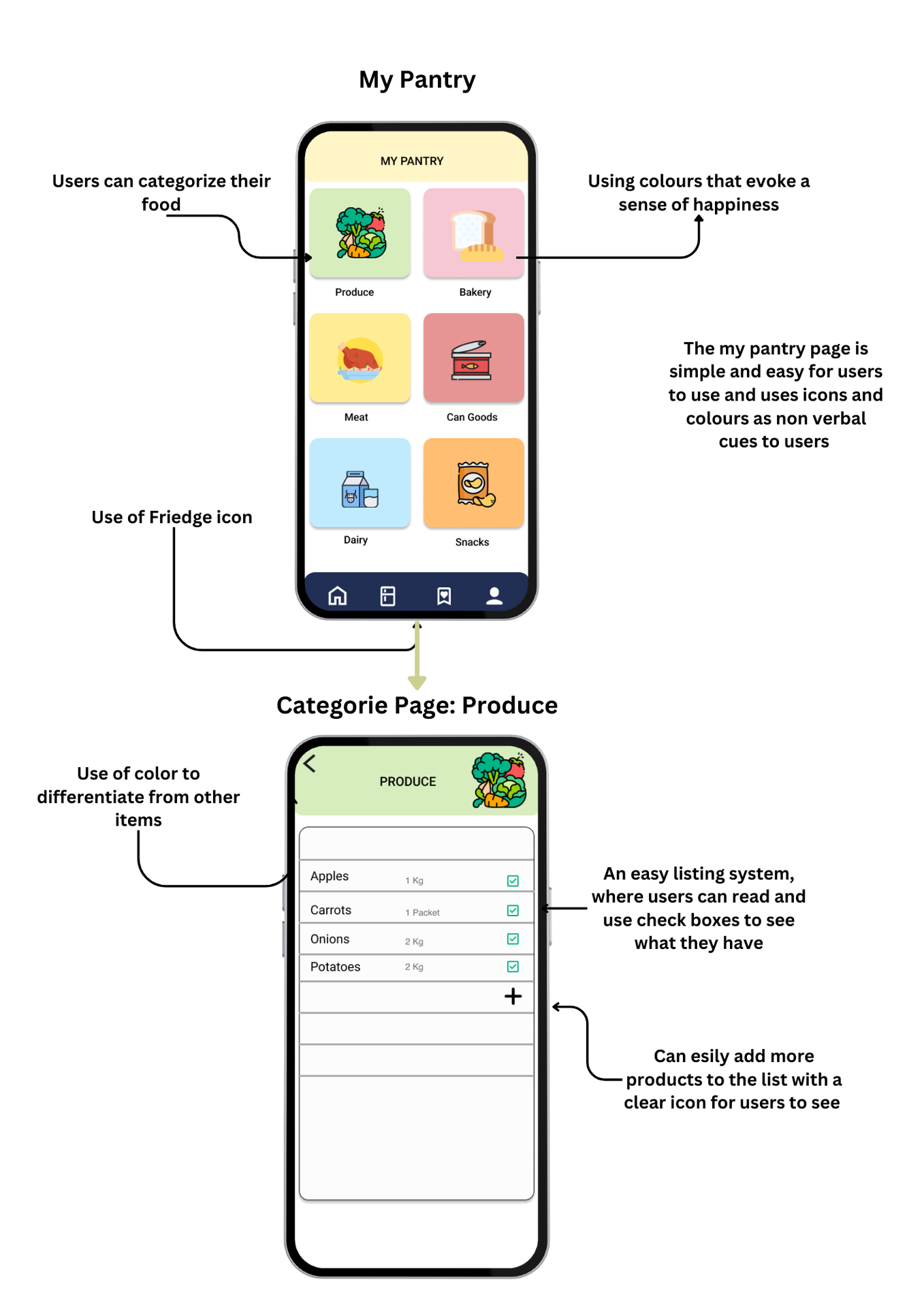
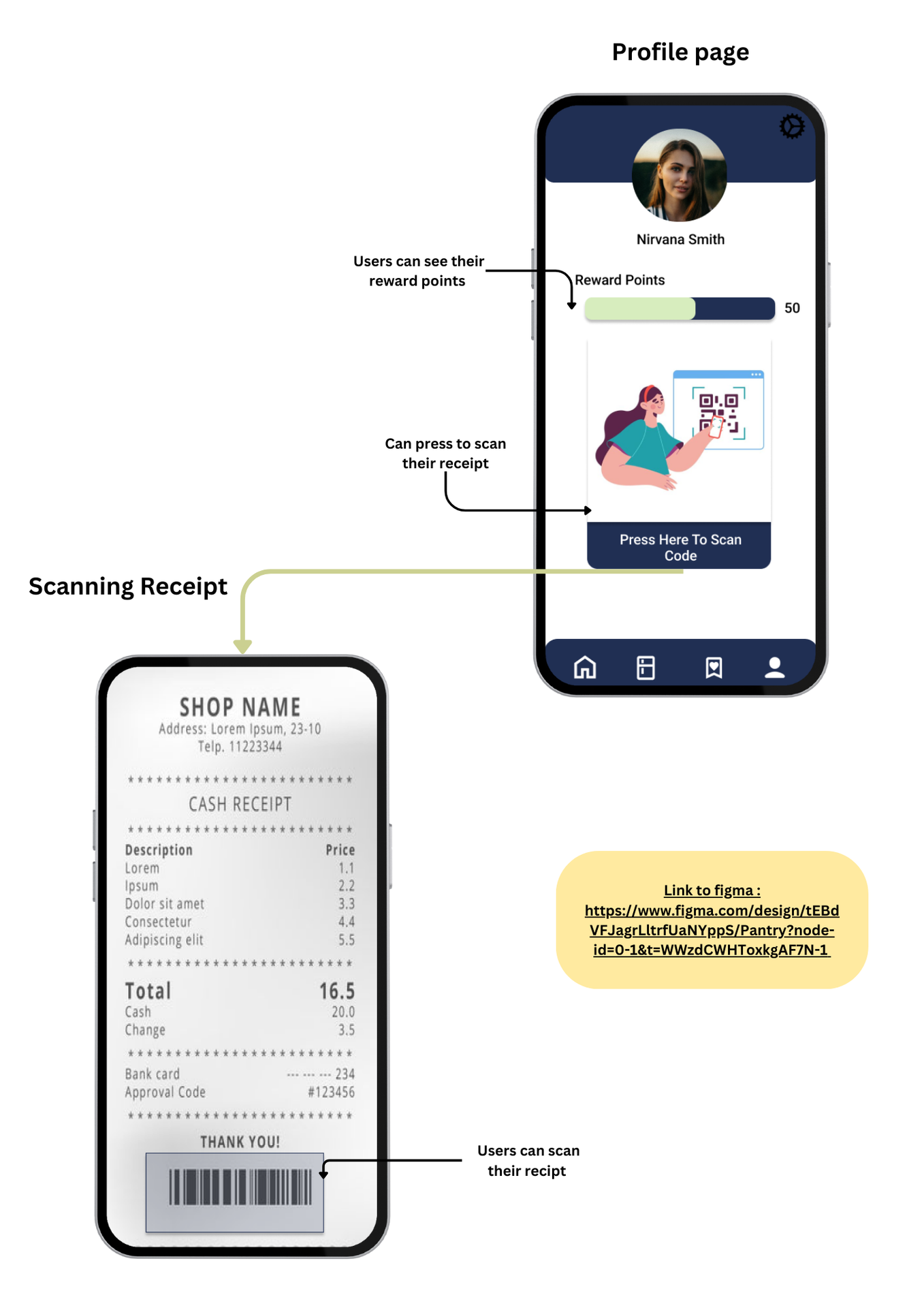
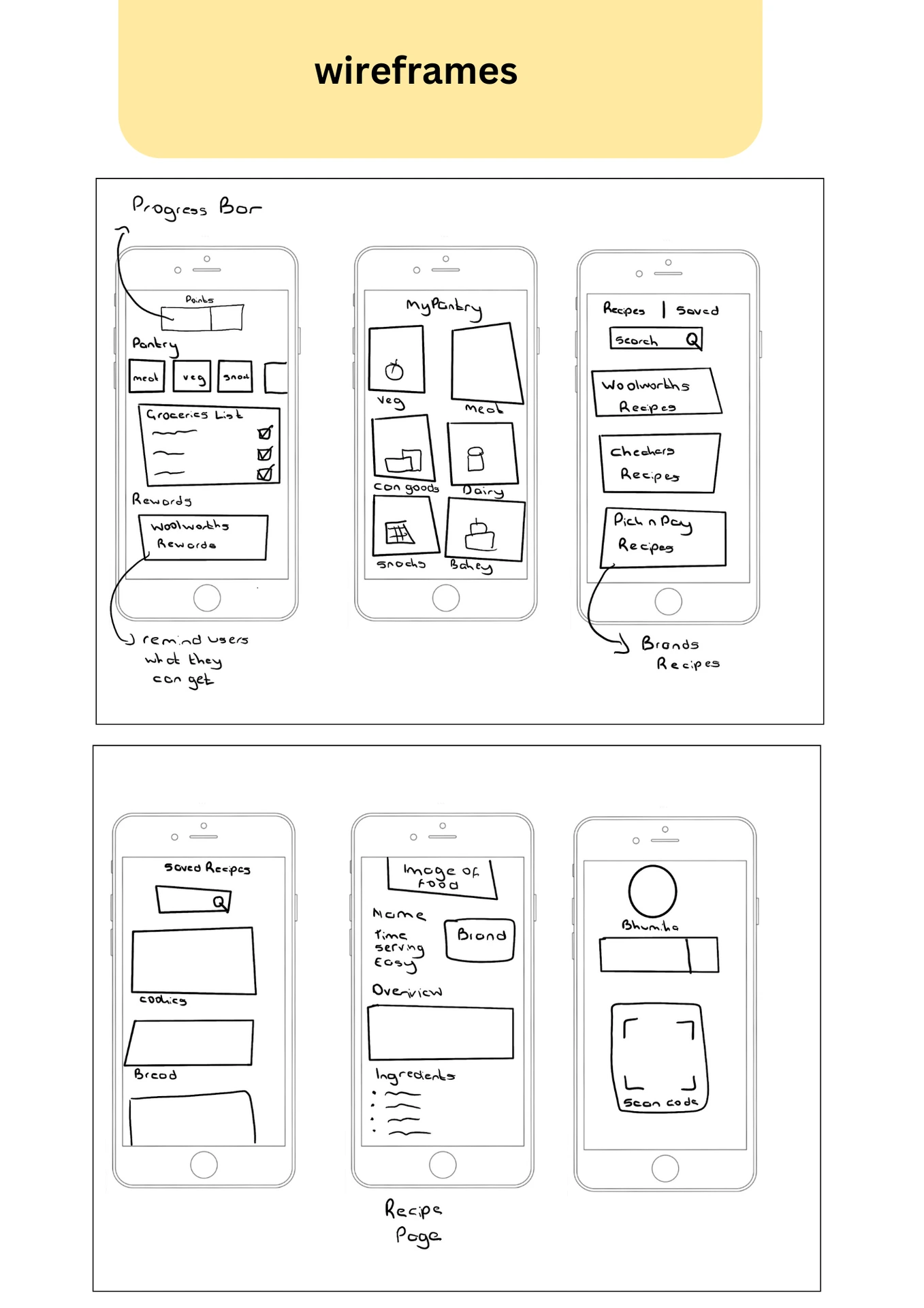
Design features Wireframes
Key Takeaways
Behavioral psychology can strongly influence everyday habits
Emotional design helps users feel supported, not judged
Small nudges can lead to meaningful lifestyle changes
Understanding triggers is key to designing effective habit-forming products
Final Designs