Project Overview
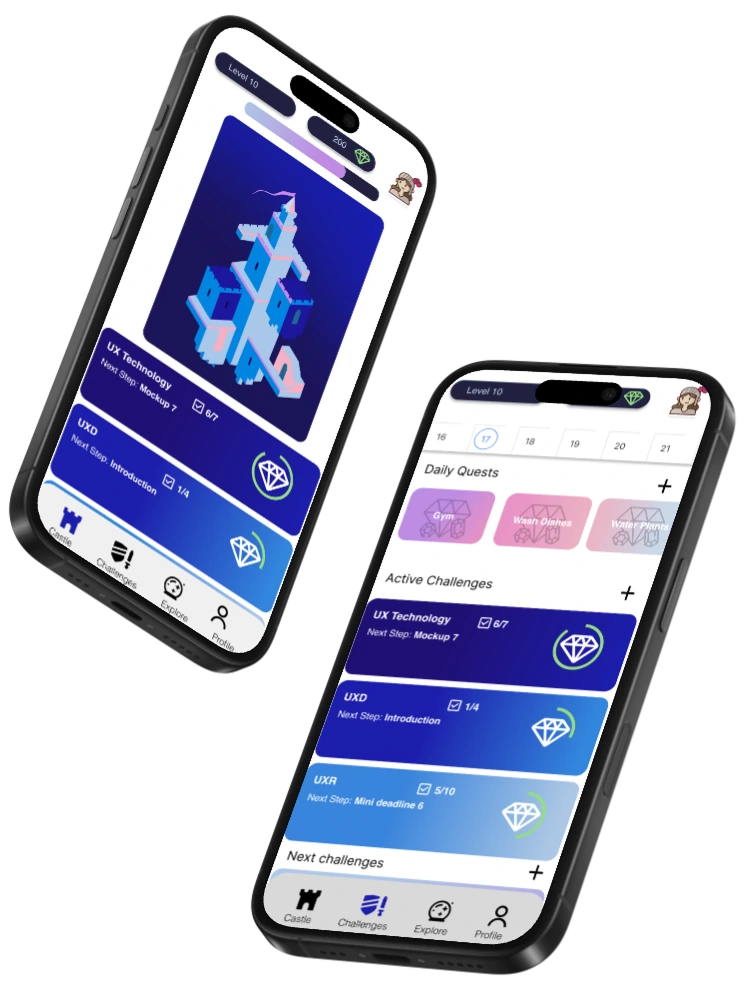
Gamification of Productivity is a mobile productivity app concept designed to motivate users to complete tasks in a fun and engaging way. The project explores how gamification and fantasy elements can increase user motivation, consistency, and overall productivity.
Background & Inspiration
This project was inspired by brainstorming sessions, research, and discussions around why many productivity apps fail to retain users over time. A recurring pattern emerged: people often download productivity apps with good intentions but struggle to stay motivated or engaged enough to use them consistently.
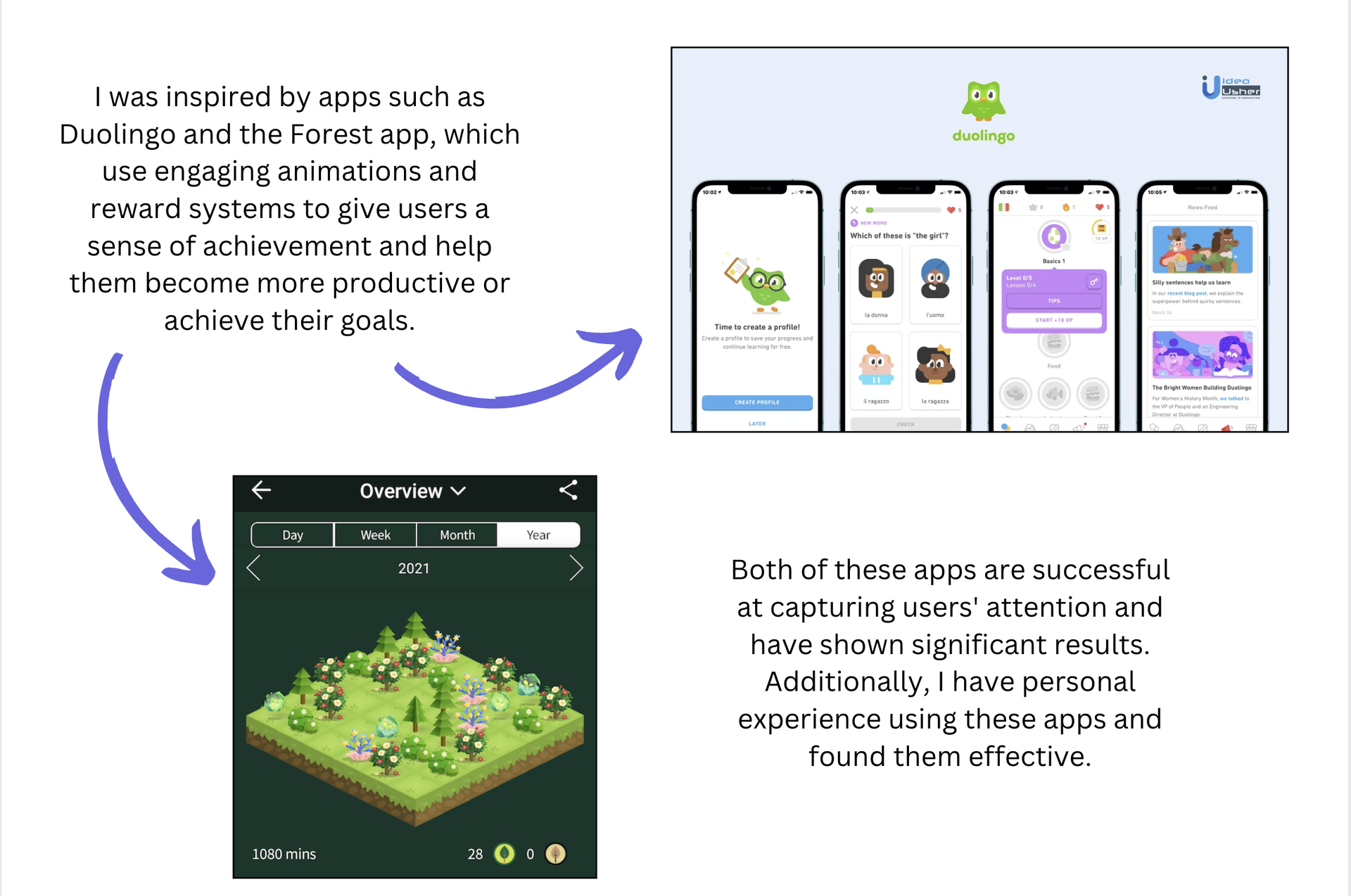
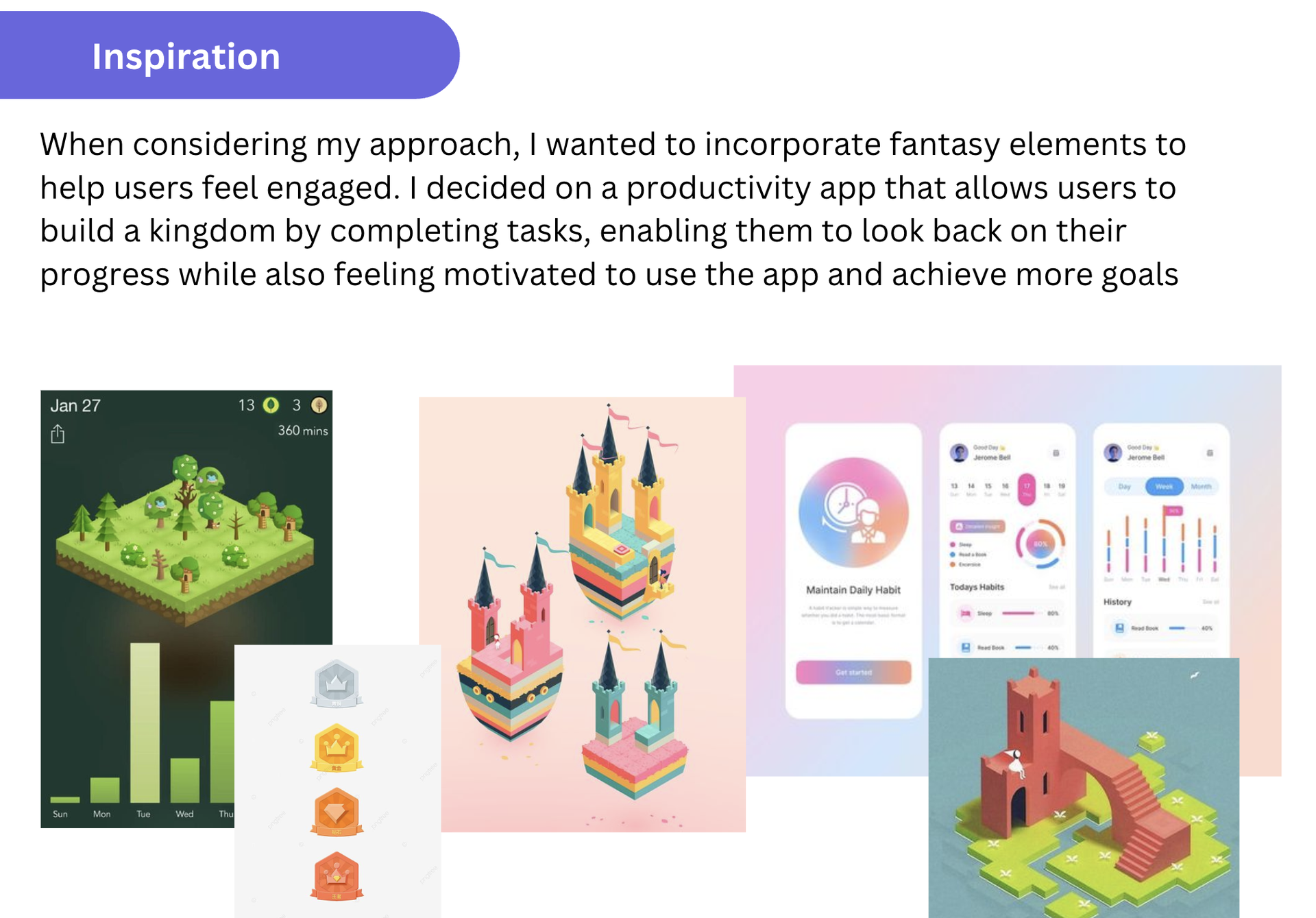
Gamification is a growing trend in digital products, proven to improve engagement by incorporating rewards, progress tracking, and a sense of achievement. I was particularly inspired by apps such as Duolingo and Forest, which use animations, reward systems, and visual progress to motivate users and make goal completion feel rewarding rather than tedious.
Problem Statement
Traditional productivity apps often feel repetitive, rigid, or uninspiring, which leads to user drop-off. Users need motivation, engagement, and positive reinforcement to continue completing tasks consistently.
User Research
Through user research and informal surveys, I identified key user needs and motivations. Users expressed that they wanted:
A sense of achievement
Rewards for completing tasks
Clear visibility of their progress
Instant gratification
A fun and engaging way to complete boring or repetitive tasks
These insights reinforced the idea that productivity could be enhanced through game mechanics rather than traditional task lists alone.
Paper Prototyping
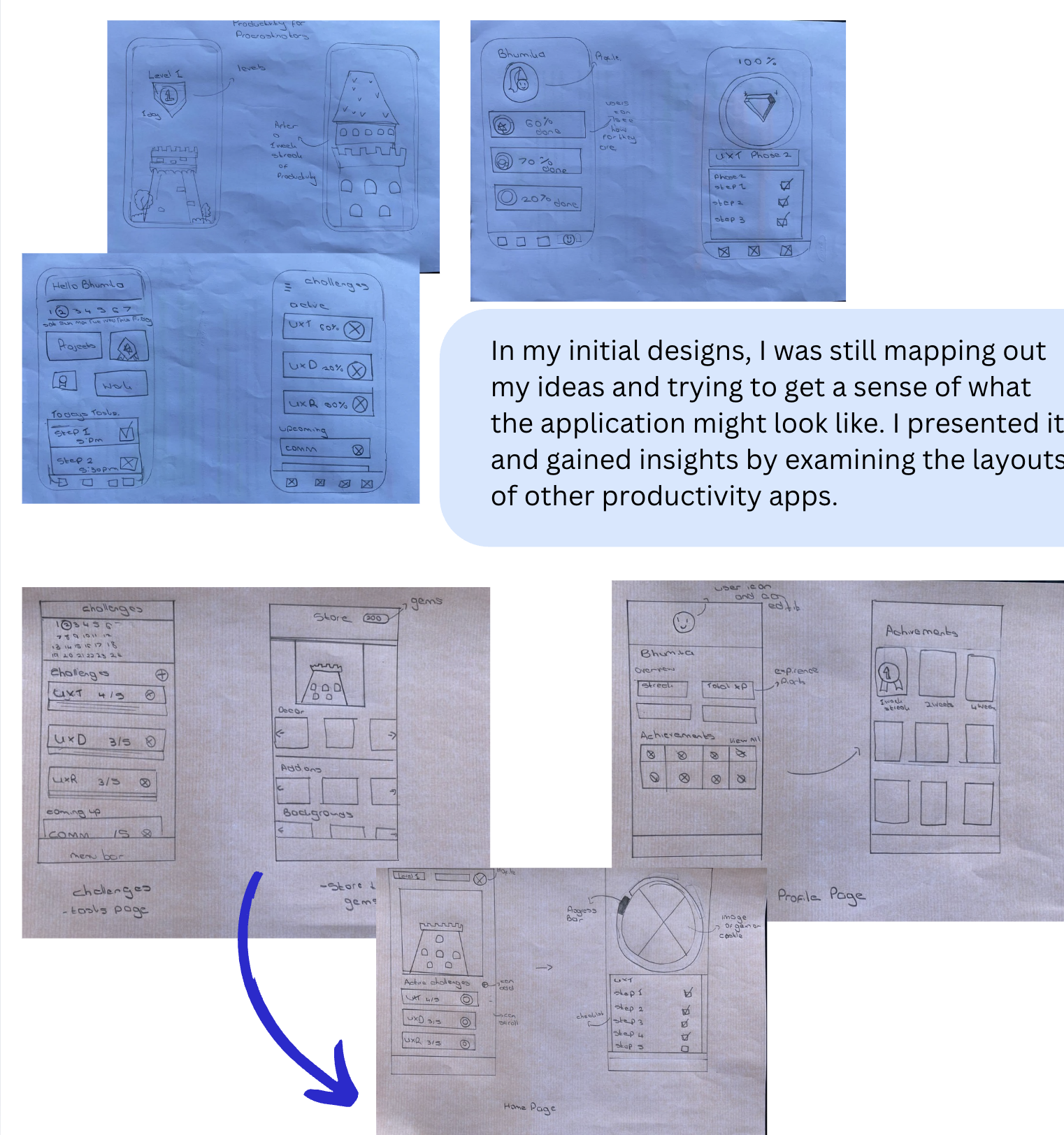
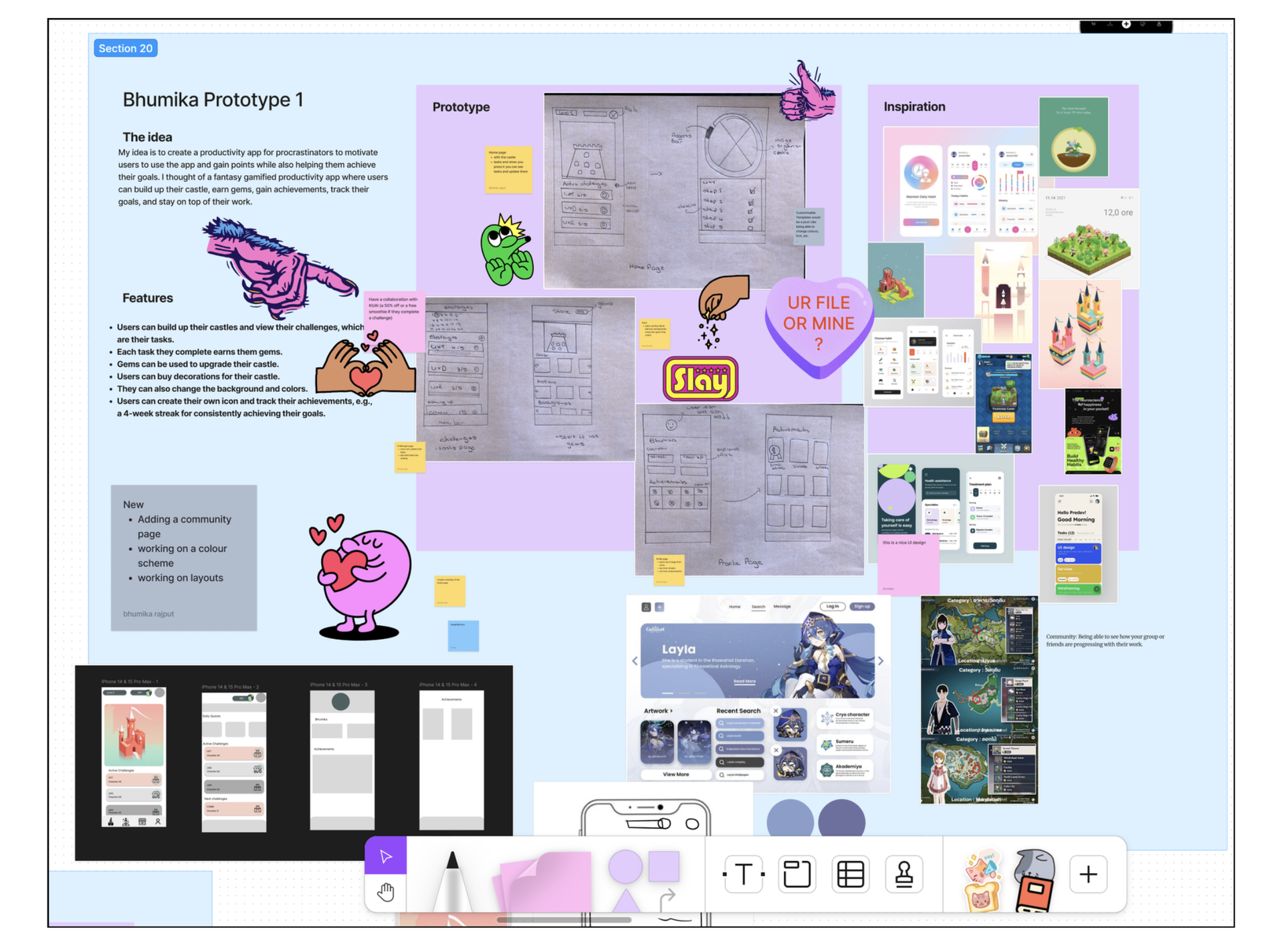
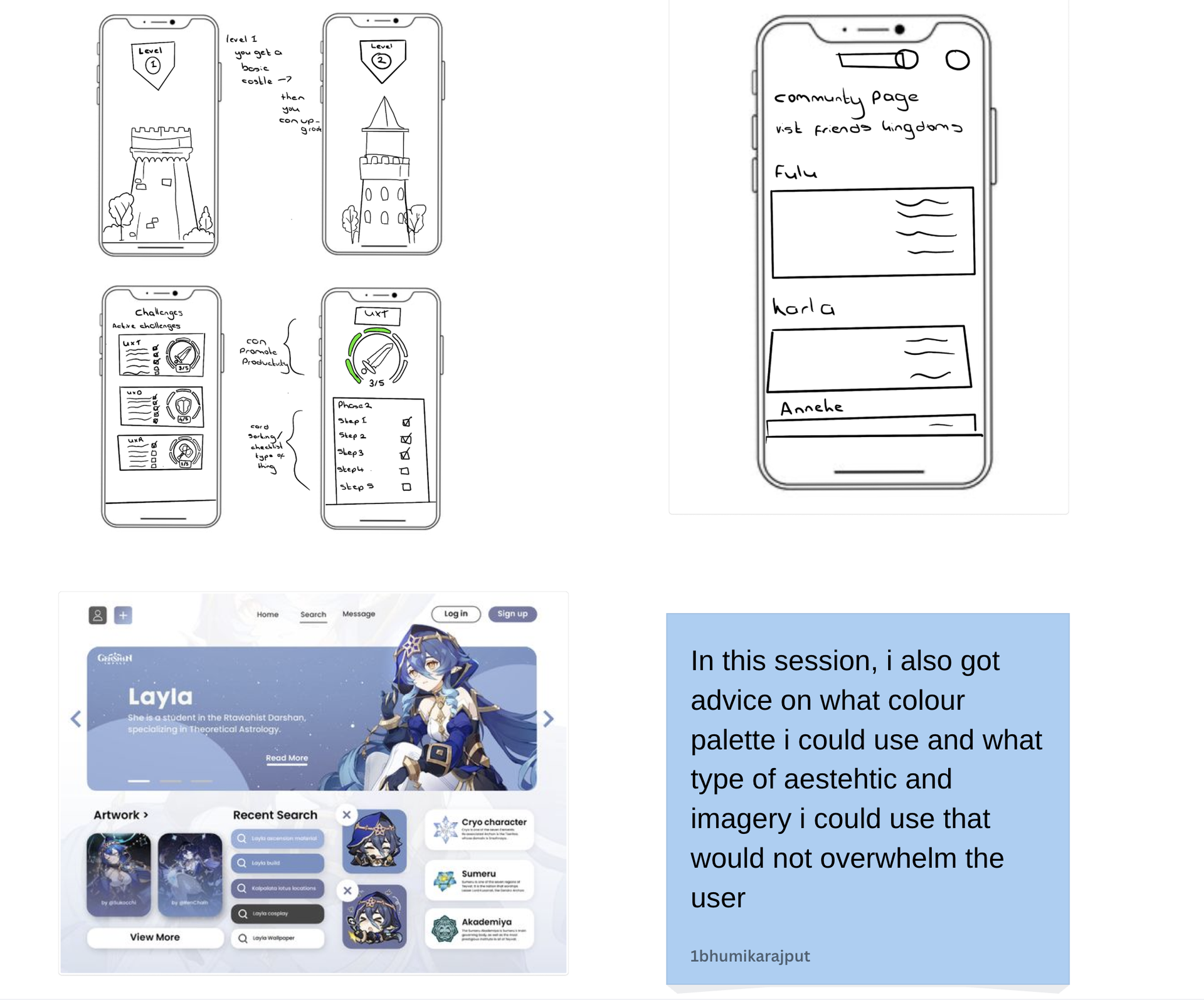
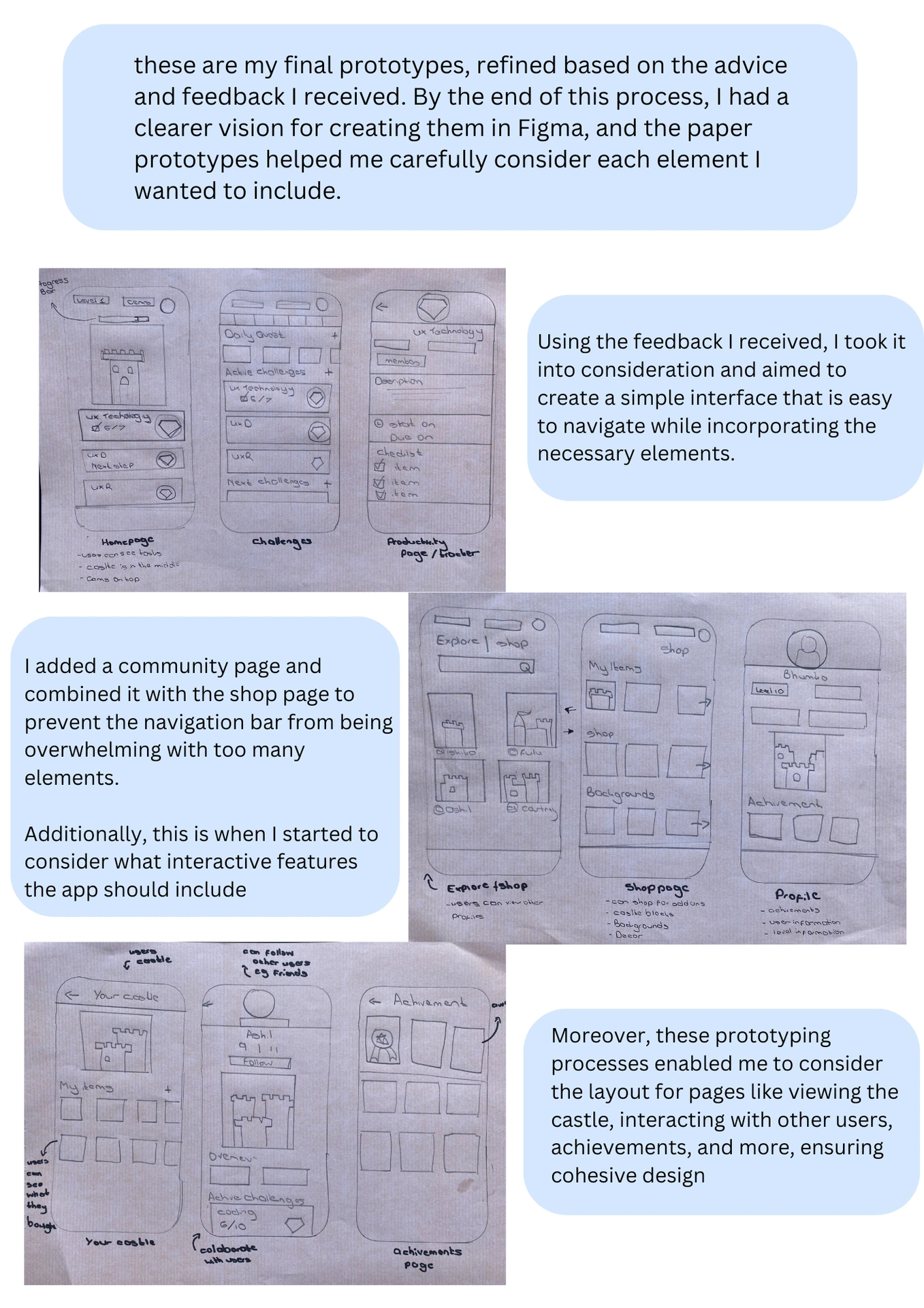
During the early stages of design, I explored ideas through paper prototyping. At this stage, I focused on mapping out core features, navigation, and layout concepts.
I analysed the layouts and flows of existing productivity apps, incorporating familiar patterns while introducing gamified elements inspired by Duolingo and similar apps. These early paper prototypes were presented during a focus group session alongside inspirational imagery to clearly communicate the app's vision and functionality.
Feedback & Iteration
The focus group session provided valuable and constructive feedback. Participants responded positively to the gamification concept and offered insights that helped refine the layout, improve feature clarity, and identify additional opportunities to enhance user motivation.
This feedback informed the next stage of iteration and helped shape a more intuitive and engaging experience.
Prototyping
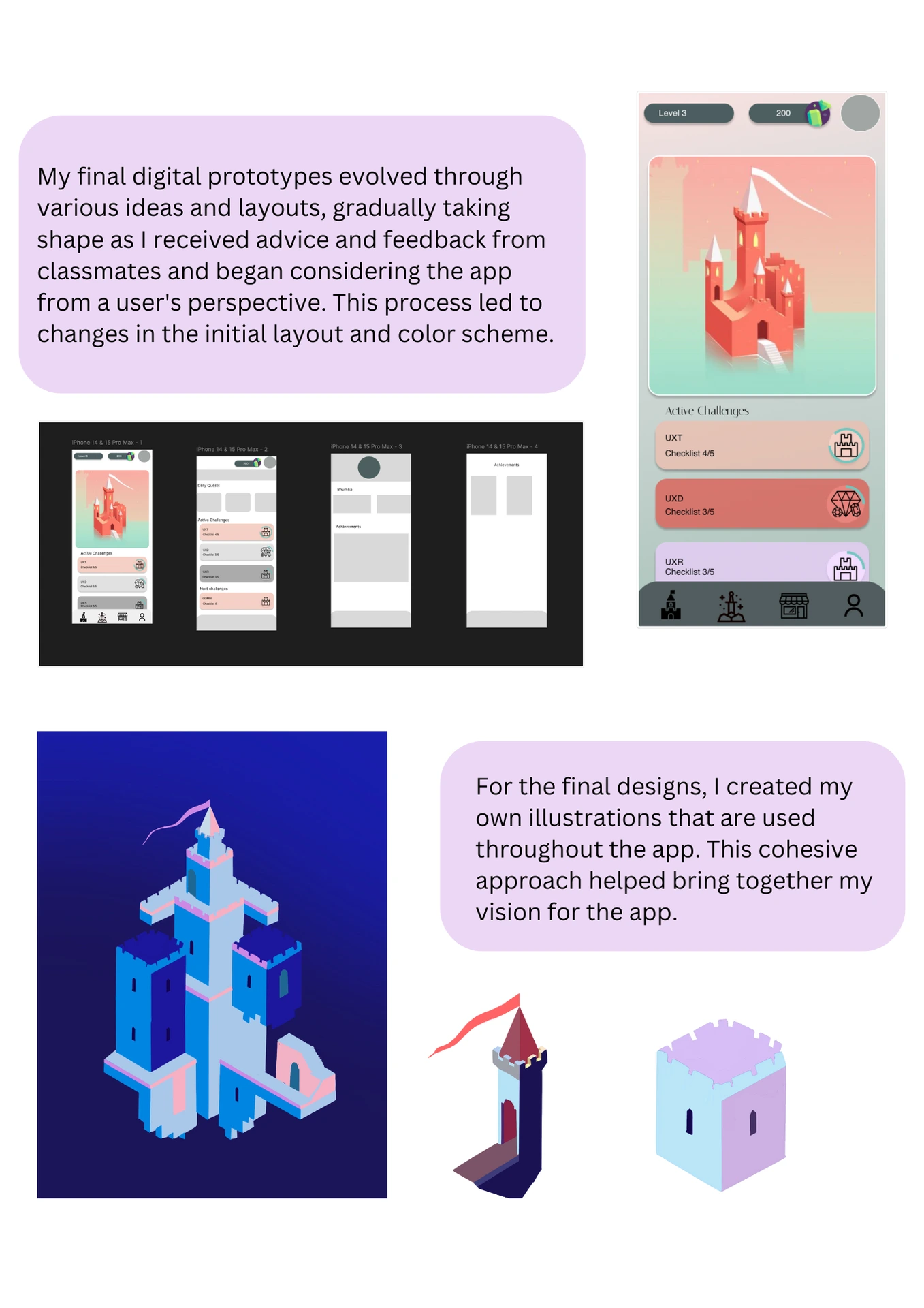
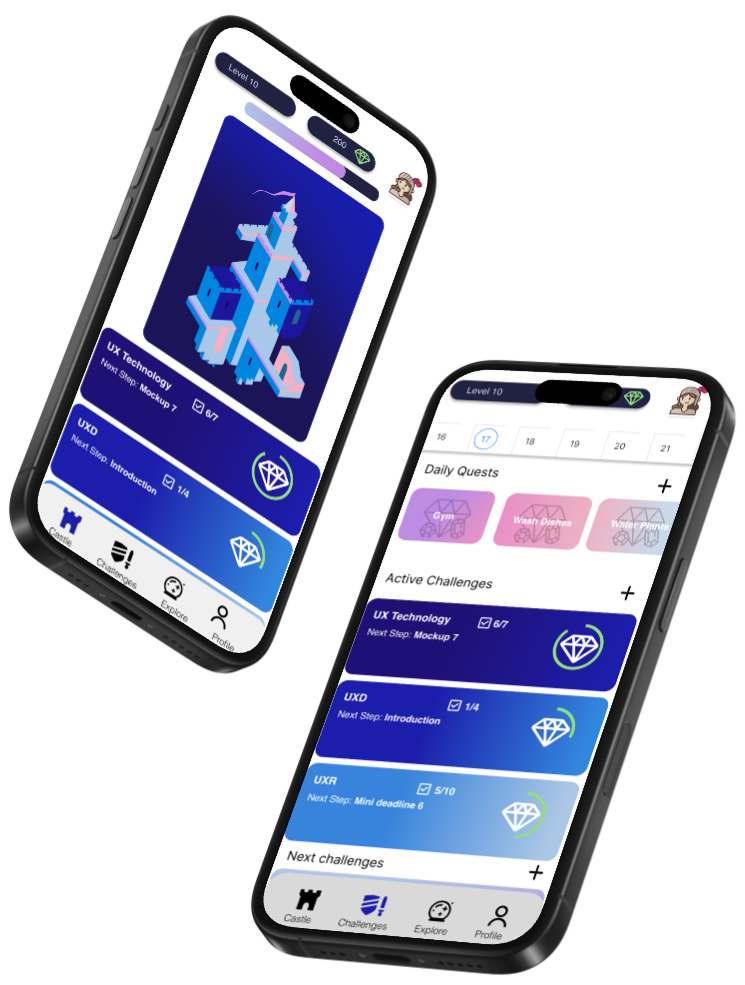
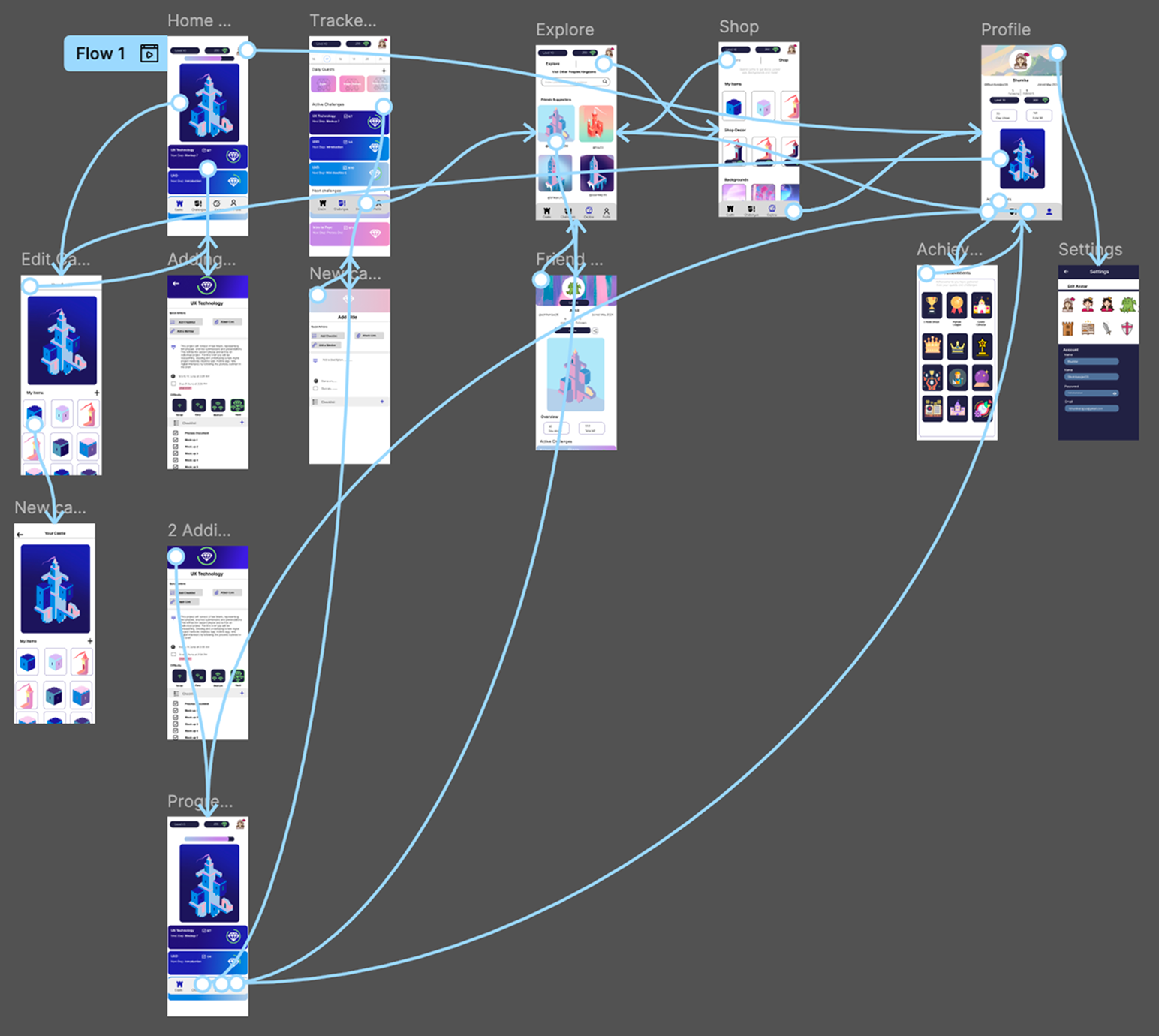
Using insights from user feedback and paper prototypes, I moved into digital prototyping. This phase focused on refining user flows, improving usability, and ensuring the reward system felt intuitive and satisfying.
Key Takeaways
Gamification can significantly improve motivation and engagement
Visual progress reinforces a sense of achievement
Fun, fantasy-driven experiences can make productivity feel less overwhelming
Early user feedback is critical in shaping effective UX solutions